SOC 2 Compliance
Achieve and maintain SOC 2 certification with expert guidance through the complete compliance lifecycle.
SOC 2 (Service Organization Control 2) is a rigorous auditing framework developed by the American Institute of CPAs (AICPA) that evaluates service organizations' controls related to the Trust Service Criteria. Unlike SOC 1, which focuses on financial reporting controls, SOC 2 specifically addresses the security, availability, processing integrity, confidentiality, and privacy of customer data. Organizations that handle sensitive customer information — SaaS providers, cloud infrastructure companies, data processing firms, and managed service providers — increasingly require SOC 2 reports to demonstrate the strength of their internal controls to clients, partners, and regulators. A SOC 2 report provides independent assurance that a service organization's systems are designed and operating effectively to meet these critical trust principles.
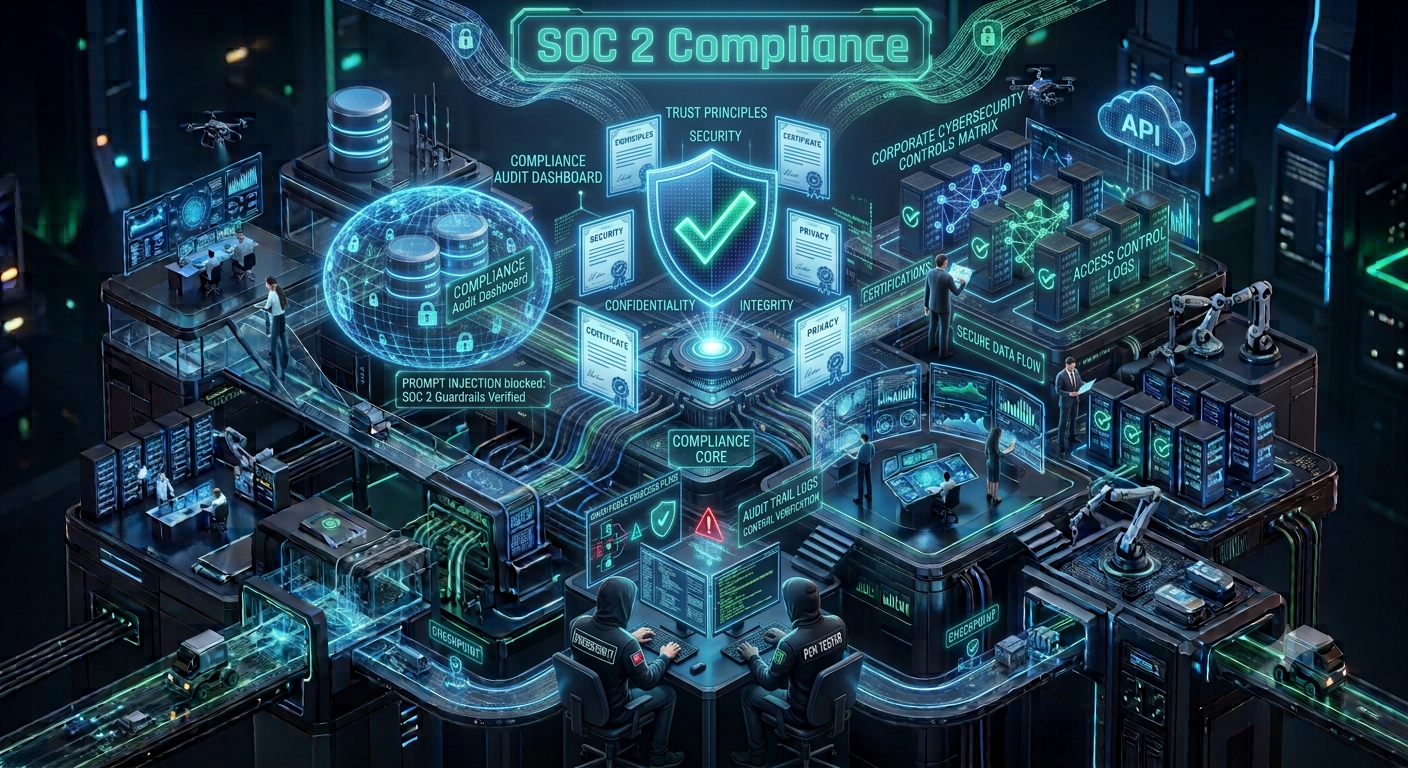
The SOC 2 framework offers two distinct report types that serve different stakeholder needs. A Type I report evaluates the suitability of the design of controls at a specific point in time, confirming that the organization has properly designed controls that address the Trust Service Criteria. A Type II report goes significantly further by assessing both the design suitability and the operating effectiveness of those controls over a defined period, typically six to twelve months. Type II reports require sustained evidence collection, continuous monitoring, and demonstrated operational consistency — making them far more valuable to prospective clients but also more demanding to achieve. Most enterprise clients and procurement teams now mandate Type II reports as a prerequisite for vendor and partner onboarding.
Our SOC 2 compliance engagement follows a comprehensive lifecycle methodology that begins with a detailed readiness assessment and gap analysis against all five Trust Service Criteria. We map existing controls to the AICPA's defined criteria, identify control gaps and weaknesses, and develop a prioritized remediation roadmap. Throughout the engagement, our team works closely with your engineering, operations, and compliance teams to design and implement controls, draft required policies and procedures, establish evidence collection mechanisms, and prepare the system description and control narratives. We provide hands-on support through the entire audit lifecycle — from readiness through remediation through the formal audit with your chosen CPA firm.
What distinguishes our approach is our focus on building sustainable compliance programs rather than point-in-time checkbox exercises. We help organizations implement automated evidence collection using industry-leading tools such as Vanta, Drata, Secureframe, and custom integrations with your existing infrastructure. By embedding compliance controls into CI/CD pipelines, infrastructure-as-code templates, monitoring and alerting systems, and access review workflows, we ensure that compliance becomes an ongoing operational capability rather than a periodic fire drill. Our clients consistently achieve SOC 2 certification in three to six months and maintain continuous compliance with minimal incremental effort through automated monitoring and periodic control testing.
How We Deliver
A structured methodology refined through hundreds of successful engagements.
Scoping & Readiness Assessment
We begin by defining the scope of your SOC 2 engagement, identifying which systems, services, and infrastructure are in-scope, and which Trust Service Criteria apply to your organization. Our assessors conduct a thorough readiness evaluation against the selected criteria, reviewing existing policies, control documentation, system descriptions, and current security practices. We deliver a comprehensive readiness report detailing current-state maturity, control gaps, and the effort required to achieve certification, along with a detailed project roadmap with timelines, milestones, and resource requirements.
Control Design & Implementation
Based on the readiness assessment findings, we design and implement controls that address each applicable Trust Service Criteria. This includes developing and updating information security policies, incident response plans, business continuity and disaster recovery procedures, change management processes, logical and physical access controls, data classification and handling procedures, vendor management programs, and monitoring and detection capabilities. Each control is documented with clear objectives, detailed procedures, assigned ownership, and defined evidence artifacts that will demonstrate both design and operating effectiveness.
Evidence Collection & Documentation
We establish systematic evidence collection processes to capture the artifacts that auditors will examine during the formal audit. This includes configuring automated evidence collection from your cloud infrastructure (AWS, Azure, GCP), SaaS applications, identity providers, monitoring tools, and ticketing systems. We develop the SOC 2 system description, prepare control matrices mapped to each Trust Service Criteria, create supporting narratives, and organize evidence packages. Our team reviews all evidence for completeness, accuracy, and relevance before the formal audit begins.
Remediation & Control Testing
Following the initial control implementation, we conduct rigorous internal testing to validate both the design suitability and operating effectiveness of each control. Any identified control deficiencies are documented with root cause analysis and prioritized for remediation. We retest remediated controls and iteratively refine control design and execution until all controls are operating effectively. For Type II engagements, we establish continuous monitoring and testing cadences throughout the audit period to ensure sustained effectiveness and address any emerging issues promptly.
Audit Support & Certification
We serve as your primary liaison during the formal SOC 2 audit conducted by your independent CPA firm. Our team coordinates evidence requests, facilitates auditor walkthroughs and interviews, provides responses to inquiries, and manages the overall audit timeline. Following the audit, we review the draft SOC 2 report for accuracy, address any findings or qualifications, and assist with report distribution to stakeholders. We also develop a post-certification maintenance plan including periodic control testing, evidence review, and preparation for subsequent audit cycles.
What You Receive
Every engagement delivers actionable insights and tangible outcomes.
SOC 2 Readiness Report
Comprehensive assessment report detailing current-state maturity against selected Trust Service Criteria, including control gap analysis, risk ratings, and a prioritized remediation roadmap with effort estimates and resource recommendations.
Control Design Documentation
Complete set of designed controls mapped to each applicable Trust Service Criteria, including control objectives, detailed procedures, ownership assignments, evidence requirements, and monitoring cadences for each control.
Evidence Collection Packages
Organized evidence artifacts demonstrating control design and operating effectiveness, including system-generated reports, configuration snapshots, access review records, monitoring logs, and incident documentation mapped to specific control objectives.
SOC 2 Report & Certification
Final SOC 2 Type I or Type II report issued by your independent CPA firm, accompanied by our post-certification maintenance program including automated monitoring dashboards, periodic testing schedules, and ongoing compliance advisory support.
Key Benefits
Partner with SecureNexGen for results that matter.
Audit-Ready in 3-6 Months
Our structured methodology and automated evidence collection accelerate your path to certification, enabling most organizations to achieve SOC 2 Type II readiness within three to six months from engagement start, significantly faster than typical industry timelines.
Enterprise Sales Acceleration
SOC 2 certification is increasingly required by enterprise procurement teams and as a prerequisite for platform marketplace listings. Certification directly unblocks revenue opportunities by satisfying vendor due diligence requirements and shortening sales cycles.
Continuous Compliance Program
We build automated compliance monitoring that continuously validates control effectiveness rather than relying on annual point-in-time assessments. Ongoing evidence collection and automated testing reduce annual audit preparation time by up to 70 percent.
Trusted Partner Network
Join our network of certified organizations and gain access to shared best practices, control libraries, policy templates, and community intelligence. Our alumni network provides ongoing peer support and continuous improvement resources.
What's Covered
Comprehensive scope designed to leave no stone unturned.
Frequently Asked Questions
Common queries about our service delivery and process.
What is the difference between SOC 2 Type I and Type II?
Which Trust Service Criteria should my organization select?
How long does the SOC 2 certification process take?
Can my organization achieve SOC 2 without dedicated compliance staff?
What happens after we receive our SOC 2 report?
Ready to Get Started?
Contact our team to discuss your requirements and receive a tailored proposal.