ISO 27001 Certification
Information security management system certification consulting and audit readiness for ISO/IEC 27001:2022.
ISO/IEC 27001:2022 is the internationally recognized standard for Information Security Management Systems (ISMS), providing a systematic framework for establishing, implementing, maintaining, and continually improving an organization's information security posture. The standard adopts a process-based approach following the Plan-Do-Check-Act (PDCA) continuous improvement model, integrating information security into the organization's core business processes, governance structures, and risk management practices. ISO 27001 certification demonstrates to clients, partners, regulators, and stakeholders that an organization has implemented best-practice information security controls and operates a management system that ensures ongoing protection of information assets. Unlike point-in-time assessments or audit-based certifications, ISO 27001 requires sustained management commitment, periodic internal audits, management reviews, and continuous improvement through formal corrective and preventive action processes.
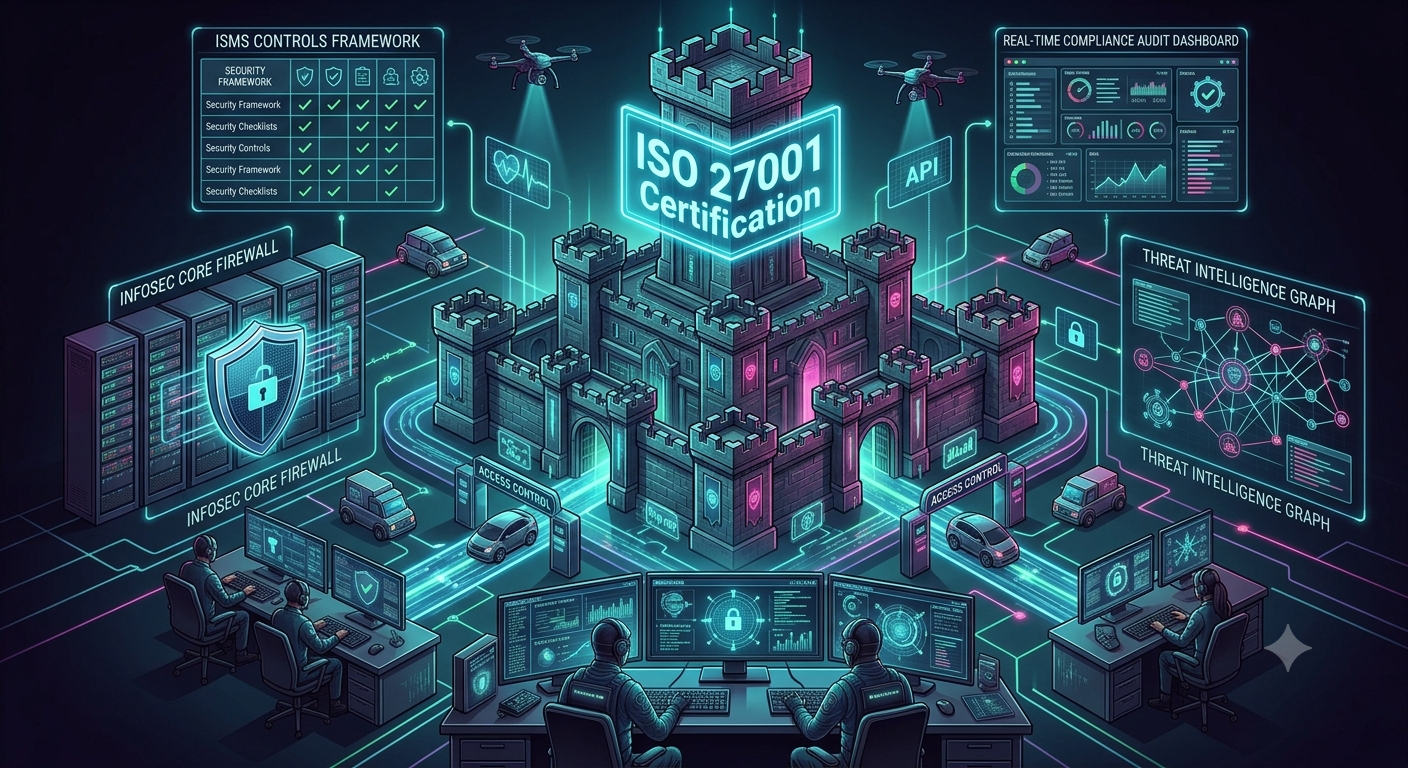
The ISO 27001:2022 standard is structured around mandatory Clauses 4 through 10 that define the ISMS requirements, complemented by Annex A which provides a reference catalog of 93 controls organized across 4 themes: Organizational Controls (37 controls), People Controls (8 controls), Physical Controls (14 controls), and Technological Controls (34 controls). The mandatory clauses address organizational context and stakeholder expectations (Clause 4), leadership commitment and policy (Clause 5), planning including risk assessment and risk treatment (Clause 6), support including resources, competence, awareness, and communication (Clause 7), operation including risk treatment plan implementation and operational planning and control (Clause 8), performance evaluation including monitoring, measurement, analysis, evaluation, internal audit, and management review (Clause 9), and improvement including nonconformity, corrective action, and continual improvement (Clause 10). Organizations must develop a Statement of Applicability (SoA) documenting which Annex A controls are applicable, the justification for inclusion or exclusion, and how controls are implemented.
The ISO 27001 certification process involves two distinct stages conducted by an accredited certification body. Stage 1 is a preparatory audit that reviews the ISMS documentation, including the scope, information security policy, risk assessment methodology, risk treatment plan, Statement of Applicability, and key policies and procedures. The auditor assesses whether the ISMS is adequately designed to meet the standard's requirements and verifies that the organization is ready for the more detailed Stage 2 audit. Stage 2 is the main certification audit where the auditor tests the implementation and operating effectiveness of the ISMS through extensive evidence review, staff interviews, and process observation. The auditor evaluates whether controls are operating as designed, whether risk treatment has been effectively implemented, and whether the PDCA cycle is functioning properly. Following successful completion of Stage 2, the certification body issues the ISO 27001 certificate, which is valid for three years subject to annual surveillance audits and a recertification audit at the end of the three-year cycle.
Our ISO 27001 certification consulting practice provides end-to-end support for organizations pursuing initial certification or transitioning from ISO 27001:2013 to the 2022 revision. We begin with a gap analysis against the ISO 27001:2022 requirements, assessing current ISMS maturity, existing controls, documentation completeness, and organizational readiness. We guide organizations through the full ISMS implementation lifecycle — defining scope and context, conducting risk assessments using established methodologies (ISO 27005, OCTAVE, or NIST SP 800-30), developing risk treatment plans, designing and implementing Annex A controls, creating and managing ISMS documentation, conducting internal audits, facilitating management reviews, and preparing for certification body audits. Our consultants include experienced lead auditors who understand the certification process from both the implementation and assessment perspectives, enabling us to prepare organizations effectively while avoiding common pitfalls that delay certification. We provide practical, business-aligned advice that balances security requirements with operational efficiency and cost-effectiveness.
How We Deliver
A structured methodology refined through hundreds of successful engagements.
Gap Analysis & ISMS Scoping
We conduct a comprehensive gap analysis comparing your current information security practices, policies, and controls against the requirements of ISO/IEC 27001:2022. This assessment evaluates documentation completeness, control implementation status, risk management maturity, and organizational readiness across all mandatory clauses and applicable Annex A controls. We help define the ISMS scope, determining which parts of the organization, which information assets, and which physical and geographic locations will be included in the certification boundary. The scope definition considers business context, interested party requirements, regulatory obligations, and the interfaces and dependencies between in-scope and out-of-scope areas. The resulting gap analysis report provides a detailed baseline assessment, certification readiness rating, and a comprehensive implementation roadmap with phased activities, milestones, resource requirements, and timeline projections.
Risk Assessment & Treatment Planning
We facilitate a structured information security risk assessment aligned with the ISO 27001 requirement for a defined and documented risk assessment process. Using established methodologies such as ISO 27005 or internally developed approaches, we identify information assets, evaluate threats and vulnerabilities, assess likelihood and impact, and determine risk levels. The risk assessment covers confidentiality, integrity, and availability of information assets, considering both digital and physical information in all forms and media. Based on the risk assessment results, we develop a Risk Treatment Plan (RTP) that defines treatment options (risk modification, retention, avoidance, or sharing) and maps selected treatments to applicable Annex A controls. We help develop the Statement of Applicability (SoA) that documents the rationale for each control's inclusion or exclusion, providing auditable evidence of the decision-making process and alignment between risk assessment findings and control selection.
ISMS Implementation & Control Deployment
We guide and support the implementation of the ISMS including the full suite of mandatory documentation required by ISO 27001:2022. This includes the ISMS scope document, information security policy, risk assessment and risk treatment methodology, Statement of Applicability, risk assessment report, risk treatment plan, incident response procedures, business continuity procedures, internal audit program, management review process, corrective action procedures, and the complete set of Annex A control implementation documentation. For each applicable Annex A control, we help design and implement appropriate controls, develop supporting procedures and work instructions, assign control ownership, establish performance metrics, and create evidence collection mechanisms. We work with your teams to integrate ISMS processes into day-to-day operations, ensuring that security controls become embedded in normal business workflows rather than existing as separate compliance activities.
Internal Audit & Management Review
We conduct rigorous internal audits of your ISMS to evaluate compliance with ISO 27001:2022 requirements and assess the effectiveness of control implementation. Our internal audit program includes audit planning, checklist development, evidence collection, findings documentation, and reporting. Internal audits evaluate both the technical implementation of controls and the operational effectiveness of ISMS processes including risk management, incident response, change management, supplier security, and competency management. Following the internal audit, we facilitate management review meetings as required by Clause 9.3, preparing management review inputs including audit results, stakeholder feedback, security incident summaries, risk assessment updates, performance metrics, and improvement recommendations. We document management review outputs including decisions, action items, resource allocation, and improvement initiatives. These activities ensure that the ISMS demonstrates the continuous improvement cycle required for certification.
Certification Audit Preparation & Support
We prepare your organization for both Stage 1 and Stage 2 certification audits conducted by your chosen accredited certification body. For Stage 1, we conduct a pre-audit documentation review ensuring that all mandatory ISMS documentation is complete, current, and properly structured. We prepare your team for the Stage 1 audit including employee interviews, facility tours, and documentation presentations. Between Stage 1 and Stage 2, we help address any findings or observations raised by the certification auditor, refine documentation, and strengthen control implementation. For Stage 2, we provide comprehensive audit readiness support including mock audit exercises, interview preparation for key personnel, evidence package organization, logistics coordination, and real-time support during the audit. Following a successful certification audit, we celebrate your achievement and establish ongoing compliance support including surveillance audit preparation, annual internal audit programs, and continuous improvement facilitation for the three-year certification cycle.
What You Receive
Every engagement delivers actionable insights and tangible outcomes.
ISMS Documentation Suite
Complete ISMS documentation package including the information security policy, ISMS scope document, risk assessment methodology, risk treatment plan, Statement of Applicability, and all supporting policies, procedures, work instructions, and records required by ISO 27001:2022 Clauses 4 through 10 and applicable Annex A controls.
Risk Assessment & Treatment Report
Comprehensive risk assessment report documenting the full inventory of information assets, identified threats and vulnerabilities, risk analysis with likelihood and impact ratings, risk level determination, and the Risk Treatment Plan with selected treatment options, assigned control owners, target implementation dates, and residual risk acceptance documentation.
Internal Audit Program & Reports
Complete internal audit program including the annual audit schedule, audit checklists mapped to ISO 27001 requirements, audit evidence documentation, nonconformity reports, corrective action requests, audit findings summary reports, and management review meeting minutes with documented decisions and action items.
Certification Readiness & Audit Package
Comprehensive certification readiness package including Stage 1 preparation documentation, Stage 2 evidence packages organized by ISO 27001 clause, interview preparation materials for key personnel, mock audit results, and post-certification surveillance audit preparation plan with ongoing compliance calendar.
Key Benefits
Partner with SecureNexGen for results that matter.
International Recognition & Trust
ISO 27001 is the most widely recognized information security standard globally, with over 60,000 certified organizations worldwide. Certification demonstrates to clients, partners, and stakeholders that your information security meets international best practices, building trust and credibility in an increasingly security-conscious marketplace.
Competitive Advantage & Market Access
ISO 27001 certification is increasingly required in procurement processes, especially for government contracts, financial services engagements, and technology partnerships. Certification differentiates you from non-certified competitors, accelerates vendor onboarding, and opens new market opportunities across regulated industries and geographic regions.
Integrated Risk Management
The ISO 27001 framework embeds information security risk management into organizational governance, ensuring that security decisions are based on business risk rather than compliance checklists. This integrated approach results in more effective resource allocation, better alignment between security investments and business objectives, and improved executive visibility into information risk.
Continuous Improvement Culture
The ISO 27001 PDCA cycle institutionalizes continuous improvement through structured processes for internal audit, management review, corrective action, and preventive action. Organizations certified to ISO 27001 consistently demonstrate improving security metrics, reduced incident rates, and more mature security practices over successive certification cycles through systematic learning and adaptation.
What's Covered
Comprehensive scope designed to leave no stone unturned.
Frequently Asked Questions
Common queries about our service delivery and process.
What is the difference between ISO 27001:2013 and ISO 27001:2022?
How long does it take to achieve ISO 27001 certification?
What is the Statement of Applicability and why is it important?
What happens during ISO 27001 surveillance audits?
Can we achieve ISO 27001 certification without external consulting support?
Ready to Get Started?
Contact our team to discuss your requirements and receive a tailored proposal.